Limited Release: The Quiet Power of a Minimalist Sans Serif
There's a particular kind of design challenge that doesn't get talked about enough. You've got a strong concept, solid copy, and a clear vision for your project—but the typography keeps fighting you. Fonts that are too decorative drown out your message. Fonts that are too plain leave everything feeling flat. What you actually need is something in that sweet spot: clean enough to let your content breathe, but refined enough to feel intentional. That's the space where Limited Release lives, and it's worth understanding why that matters.
A Typeface That Steps Back So Your Work Steps Forward
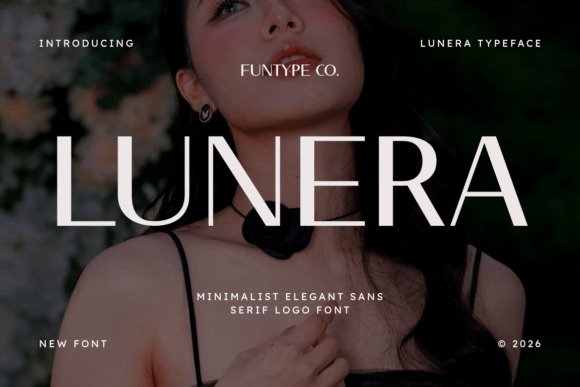
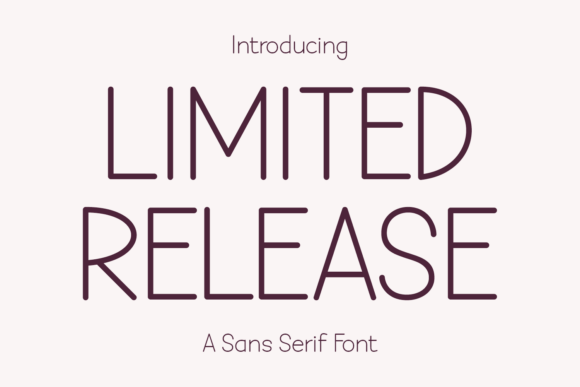
Limited Release is an elegantly minimalist sans serif font. That description might sound simple, but simplicity in type design is deceptively hard to achieve. Every curve, every letter spacing decision, every terminal has been considered. The result is a typeface that doesn't scream for attention but quietly earns it through balance and proportion.
What makes this font visually appealing isn't a single dramatic feature—it's the absence of visual noise. The letterforms are open and airy, with enough geometric structure to feel contemporary without becoming sterile. There's warmth tucked into its neutrality, which is a rare quality in modern typography. It reads well at small sizes for body text and holds its own at larger display sizes, giving you flexibility across a single project or an entire brand system.
If you've ever spent an hour cycling through font libraries looking for something that feels "right" without being able to articulate why, Limited Release is the kind of typeface that ends that search. It does its job with quiet confidence.
Where This Font Actually Works in Real Projects
The practical range of a font like this is broader than most people expect. Because it avoids stylistic extremes, it adapts to context rather than imposing its personality on everything. Here's where that plays out in tangible ways:
- Branding and Logo Design: A clean sans serif forms the backbone of countless recognizable brand identities. Limited Release works as a primary logotype for brands that want to project clarity and modernity—think wellness studios, boutique agencies, independent retailers, or tech startups. It also functions beautifully as a secondary font paired with a more expressive display typeface or script font.
- Packaging Design: On product labels, boxes, and wrapping, readability is non-negotiable. This font delivers legibility at small sizes while maintaining a polished, premium feel that elevates shelf presence.
- Social Media Graphics: Instagram posts, Pinterest pins, story templates, and carousel slides all demand fonts that read clearly on small screens. Limited Release's open letterforms and generous spacing make it a strong choice for quotes, announcements, and call-to-action text in social media graphics.
- Websites and Blogs: Web design requires type that performs across devices and screen resolutions. A sans serif like this handles navigation menus, headings, and even longer paragraphs without causing eye strain, making it practical for bloggers and content-heavy sites alike.
- Print Materials: Business cards, brochures, flyers, and postcards benefit from a font that looks crisp in print. The clean geometry of Limited Release reproduces well across different printing methods, from digital runs to offset.
- Posters and Signage: When you need text to command a wall or a storefront window, a minimalist display font with strong letter spacing gets the job done without visual clutter.
- Merchandise: Tote bags, mugs, apparel—merchandise typography needs to be bold enough to read from a distance but refined enough to feel like something people actually want to wear or use. This typeface threads that needle.
- Invitations and Event Materials: For weddings, launches, and corporate events, Limited Release pairs naturally with more decorative fonts. Use it for the essential details—date, time, venue—while a script or serif handles the headline.
- Editorial Layouts: Magazines, lookbooks, and digital publications need a workhorse sans serif for captions, pull quotes, and supporting text. This font integrates seamlessly into editorial design without competing with photography or illustration.
- Digital Products and Marketing Assets: E-books, lead magnets, email headers, presentation decks, and ad creatives all require consistent, professional typography. Having a reliable sans serif in your design assets toolkit saves time and ensures visual cohesion.
Why Visual Consistency Matters More Than You Think
One of the most overlooked aspects of building a recognizable brand or a polished project is typographic consistency. When every touchpoint—your website, your packaging, your social media graphics, your invoices—uses different fonts chosen on impulse, the result feels fragmented. Your audience might not consciously notice the inconsistency, but they register it as something being "off."
Limited Release helps solve this because its versatility allows it to serve across multiple applications without looking out of place. You can use the same typeface family for your logo, your website headings, your Instagram templates, and your printed materials, and it will feel cohesive rather than repetitive. That kind of visual consistency strengthens brand recognition over time. People start to associate that particular typographic voice with your work.
Readability is another factor that directly impacts engagement. If your audience has to work to read your text—whether on a phone screen, a product label, or a printed flyer—they disengage. The open counters and balanced proportions of a well-designed sans serif font reduce that friction. Your message gets through faster, and your audience stays with you longer.
Choosing the Right Font Style for Your Goals
Not every project needs the same typographic treatment, and understanding how to match a font to your goals is a skill worth developing. Here are some practical considerations:
- Define the mood first. Before browsing font libraries, write down three to five adjectives that describe how your project should feel. If words like "clean," "modern," "approachable," or "sophisticated" come up, a minimalist sans serif like Limited Release is a strong starting point.
- Consider your audience's context. Will they read this on a phone during a commute? On a product shelf in a store? On a printed poster at an event? Different contexts demand different readability standards. A font that looks gorgeous at 72pt on your laptop might become illegible at 9pt on a label.
- Test font pairings before committing. If you plan to use Limited Release alongside a serif font, script font, or handwritten font, set sample text in both and look at them together. Good pairings create contrast without conflict—one font leads, the other supports.
- Review the included styles. A font family with multiple weights—light, regular, medium, bold—gives you typographic range without introducing another typeface. Check what's included so you can use the full spectrum effectively.
- Don't overlook commercial licensing. If you're using a font for client work, merchandise, or any commercial project, make sure the license covers that use. This is especially important for premium fonts and design assets you purchase. Reading the licensing terms upfront prevents headaches later.
Making It Stand Out Without Making It Loud
The best typography often goes unnoticed by the average viewer—and that's a compliment. It means the font is doing its job: carrying your message clearly and reinforcing your visual identity without drawing attention to itself. Limited Release excels in this role. It's the kind of creative font that supports your ideas rather than overshadowing them.
For small business owners building a brand from scratch, it offers a professional foundation. For designers juggling multiple client projects, it provides a reliable, adaptable tool. For content creators and marketers producing high volumes of visual material, it brings consistency without monotony. And for hobbyists and crafters working on personal projects, it adds a polished touch that makes finished work feel more intentional.
The real test of any typeface isn't how it looks in a font specimen sheet—it's how it performs in the messy, varied, demanding reality of actual projects. A font that handles a wedding invitation and a product label and a website header and a social media ad with equal grace is a font worth keeping in your permanent collection. That's the quiet value of a design asset like this: it solves problems you haven't encountered yet, and it does so with understated elegance.