Bringing Stories to Life: The Open Book Font for Creative Projects
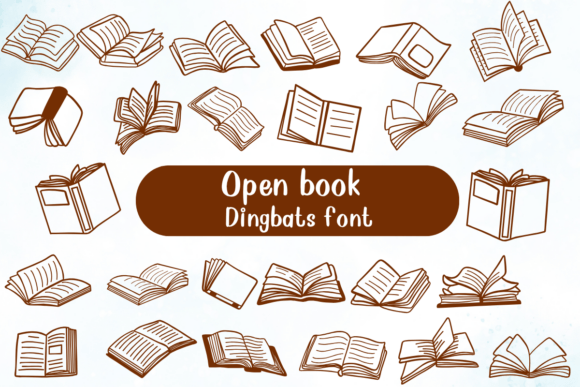
There’s something undeniably magical about a stack of well-loved books—the way the pages feel, the promise of adventure on every spine. For designers, educators, and creatives who want to capture that feeling in their work, the right visual element can make all the difference. Imagine a typeface where every letter isn’t just a character, but a tiny, hand-drawn invitation to read. That’s the charm of Open Book, a delightful dingbat font composed entirely of unique open book illustrations. It’s more than just a collection of icons; it’s a toolkit for infusing projects with warmth, nostalgia, and a genuine love for the written word.
A Typeface with Personality and Purpose
Unlike standard serif or sans-serif fonts designed for body text, Open Book operates in a special category as a creative font and a display font. Its primary function isn’t readability in long paragraphs, but rather adding thematic flair and instant visual storytelling. Each character you type produces a distinct, hand-crafted illustration of an open book. Some might be simple sketches, others more detailed with visible pages or spines. This variety allows for dynamic compositions where no two elements look exactly the same, giving projects an organic, handmade quality that polished digital graphics often lack.
This premium font shines because of its specificity. It’s not trying to be everything to everyone. Instead, it serves a clear niche: anyone working within the world of books, education, reading, and storytelling. For a small business owner running an independent bookstore, a teacher creating a classroom bulletin board, or a blogger designing a reading challenge graphic, Open Book provides an immediate visual shorthand that audiences instantly understand and connect with.
Practical Applications Across Media
The true value of a design asset like this is measured by its versatility. How can you actually use a font made of book icons? The applications are broader than you might first think.
For Branding and Identity: A children’s bookstore, a literacy nonprofit, or an author’s personal brand can integrate Open Book into their logo design or brand patterns. Using a few book icons as a repeating motif on business cards, letterheads, or website backgrounds creates a cohesive and memorable brand identity that speaks directly to its audience.
In Editorial and Packaging Design: Magazine layouts, especially for literary reviews or education publications, can use these icons as decorative elements, pull-quote accents, or section dividers. In packaging design for book subscription boxes, bookmarks, or stationery sets, the font adds a charming, thematic touch that elevates the unboxing experience.
For Digital Presence: Social media graphics for book clubs, reading influencers, or library events become instantly more engaging with a custom book icon as a profile picture frame or a recurring graphic element. On websites and blogs, they can be used as custom list bullets, favicon inspiration, or decorative borders that enhance the site’s literary theme without overwhelming the content.
On Print and Merchandise: Think beyond digital. These icons are perfect for printing on tote bags, mugs, and posters for school book fairs. They can decorate event invitations for author signings or be used on the spine design of a self-published journal. The font’s vector-based nature ensures crisp results at any size, from a tiny favicon to a large-scale poster.
Matching Font Style to Project Goals
Choosing a font, even a dingbat font, should be a strategic decision. Ask yourself: what is the core emotion or message of this project? Open Book evokes nostalgia, warmth, education, and creativity. It’s ideal for projects targeting educators, librarians, parents, children, and avid readers. It might not be the right fit for a corporate finance report or a high-tech gadget launch, and that’s okay. The strength of a specialized typeface lies in its perfect alignment with a specific audience.
When incorporating it, think about font pairing. Open Book works best as an accent, not the main text. Pair it with clean, highly readable fonts. A classic serif font like Garamond or a friendly sans serif font like Open Sans can serve as the workhorse for your body copy, while Open Book provides the decorative highlights. This contrast ensures your design remains professional and easy to consume, with the thematic elements enhancing rather than hindering readability.
Ensuring a Professional and Cohesive Result
To use a commercial font like this effectively, always review the full character set and any included styles. Does it come with alternative characters or ligatures? Understanding the full toolkit prevents designs from feeling repetitive. Before finalizing, test your chosen icons at the actual size they’ll be viewed. A detailed book illustration might lose its charm when scaled down too small, so select the simpler glyphs for those contexts.
Finally, a crucial step for any professional project is understanding the licensing. Since Open Book is a premium font, ensure the license covers your intended use, whether for a client project, merchandise for sale, or a digital product. Respecting font licensing is a non-negotiable part of professional design assets management, protecting both you and the font creator.
In the end, the best design choices feel inevitable. For a project that lives and breathes the world of books, using a font like Open Book isn’t just a decorative decision—it’s a way to build a deeper, more authentic connection with your audience. It transforms a simple graphic into a shared experience, one that says, “This is for people who love stories.”